Daily Nutrition Planning
Principles of Balanced Daily Eating
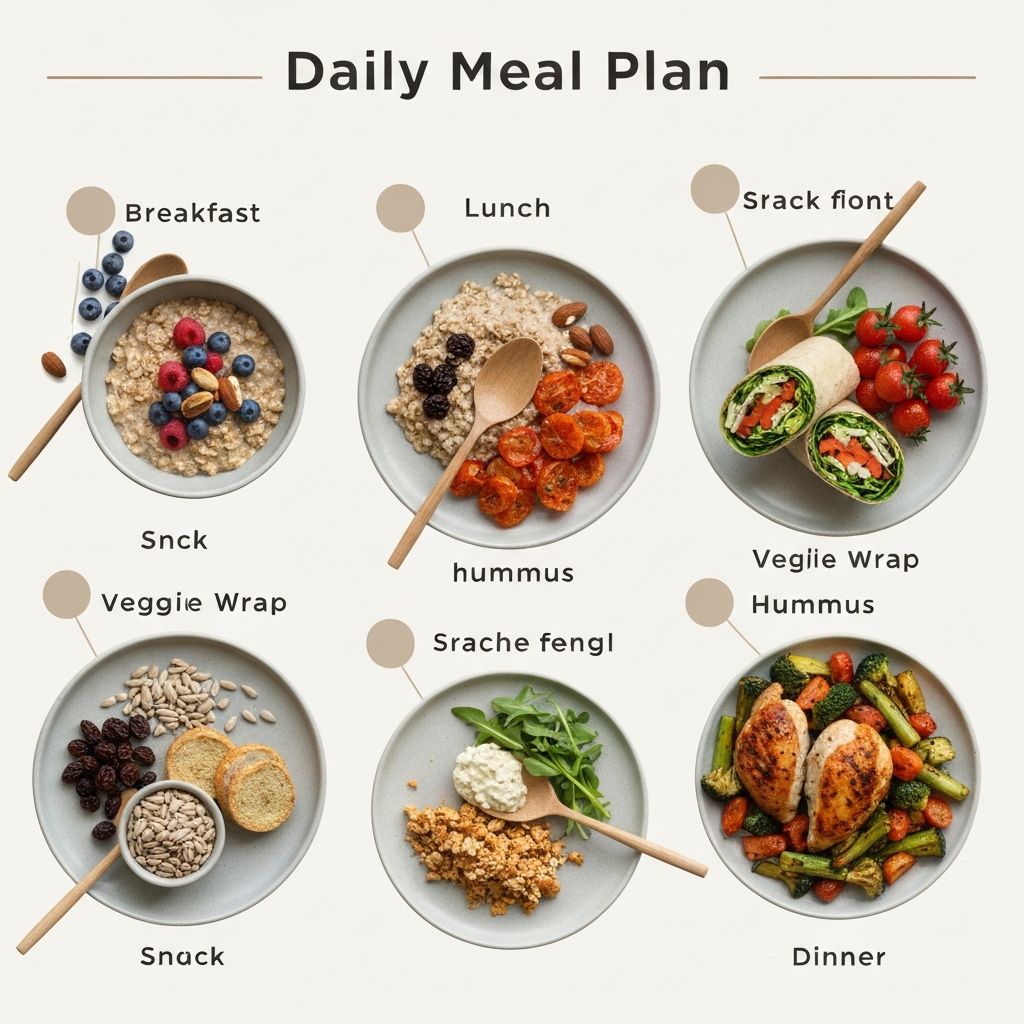
What is Daily Nutrition Planning?
Daily nutrition planning involves thinking about the foods you eat throughout the day and how they contribute to balanced nutrition. It is an educational concept about awareness and variety in eating patterns.
The Importance of Regular Meals
Eating regular meals throughout the day supports consistent energy levels and ensures regular nutrient intake. Skipping meals can lead to overeating later and energy fluctuations.
Benefits of Regular Meal Patterns:
- Sustained energy throughout the day
- Better concentration and focus
- More balanced overall nutrition
- Reduced extreme hunger
Typical Daily Meal Structure
Breakfast
Breakfast provides energy after overnight fasting. A balanced breakfast typically includes:
- Whole grains or complex carbohydrates
- Protein source
- Fruits or vegetables if possible
Example: Whole grain oats with berries and nuts.
Mid-Morning Snack (Optional)
A light snack can sustain energy between breakfast and lunch. Options include:
- Fruit or vegetable with yogurt
- Handful of nuts or seeds
- Whole grain crackers with cheese
Lunch
Lunch provides energy and nutrients for the afternoon. A balanced lunch includes:
- Protein source
- Whole grains or complex carbohydrates
- Vegetables or fruits
- Healthy fat
Example: Grilled fish with brown rice and roasted vegetables.
Afternoon Snack (Optional)
An optional afternoon snack can bridge the gap between lunch and dinner. Suitable options include:
- Fresh fruit
- Vegetables with hummus
- A small handful of nuts
Dinner
Dinner completes the day's nutritional needs. A balanced dinner includes:
- Protein source
- Complex carbohydrates
- Multiple vegetables
- Healthy fats
Example: Chicken breast with sweet potato and steamed broccoli.
Understanding Portion Considerations
Portion sizes affect total energy and nutrient intake. Reasonable portions depend on individual factors such as age, activity level, and body composition. The concept of balance involves eating appropriate amounts from each food group.
Principles of Daily Nutrition Planning
Variety
Eating different foods across meals ensures diverse nutrient intake throughout the day.
Balance
Including all food groups across daily meals provides comprehensive nutrition.
Timing
Spacing meals throughout the day supports consistent energy and nutrient absorption.
Hydration
Water is essential throughout the day. Drinking regularly supports bodily functions and overall wellness.
Adapting Plans to Your Life
Daily nutrition planning is flexible and personal. Factors that influence planning include:
- Work or school schedules
- Physical activity levels
- Food preferences and allergies
- Cultural or dietary practices
- Available time for meal preparation
Simple Planning Tips
- Plan meals ahead when possible
- Include variety from each food group
- Prepare simple, whole-food meals
- Keep healthy snacks available
- Stay hydrated throughout the day
- Listen to hunger and satiety cues
Key Takeaways
- Regular meals support consistent energy and nutrition
- Including all food groups across meals ensures balance
- Daily planning helps maintain nutrition variety
- Portion sizes and timing influence overall nutrition
- Personal flexibility makes planning sustainable
Educational Disclaimer
This article provides educational information about daily meal planning principles. Individual nutritional needs vary based on age, activity level, health status, and other personal factors. This content is not a substitute for professional medical or nutritional advice. For personalized guidance, consult qualified professionals.